Startup Office Design
How to Design a Hybrid Office for Small Teams That People Will Actually Use
At A Glance | |
|---|---|
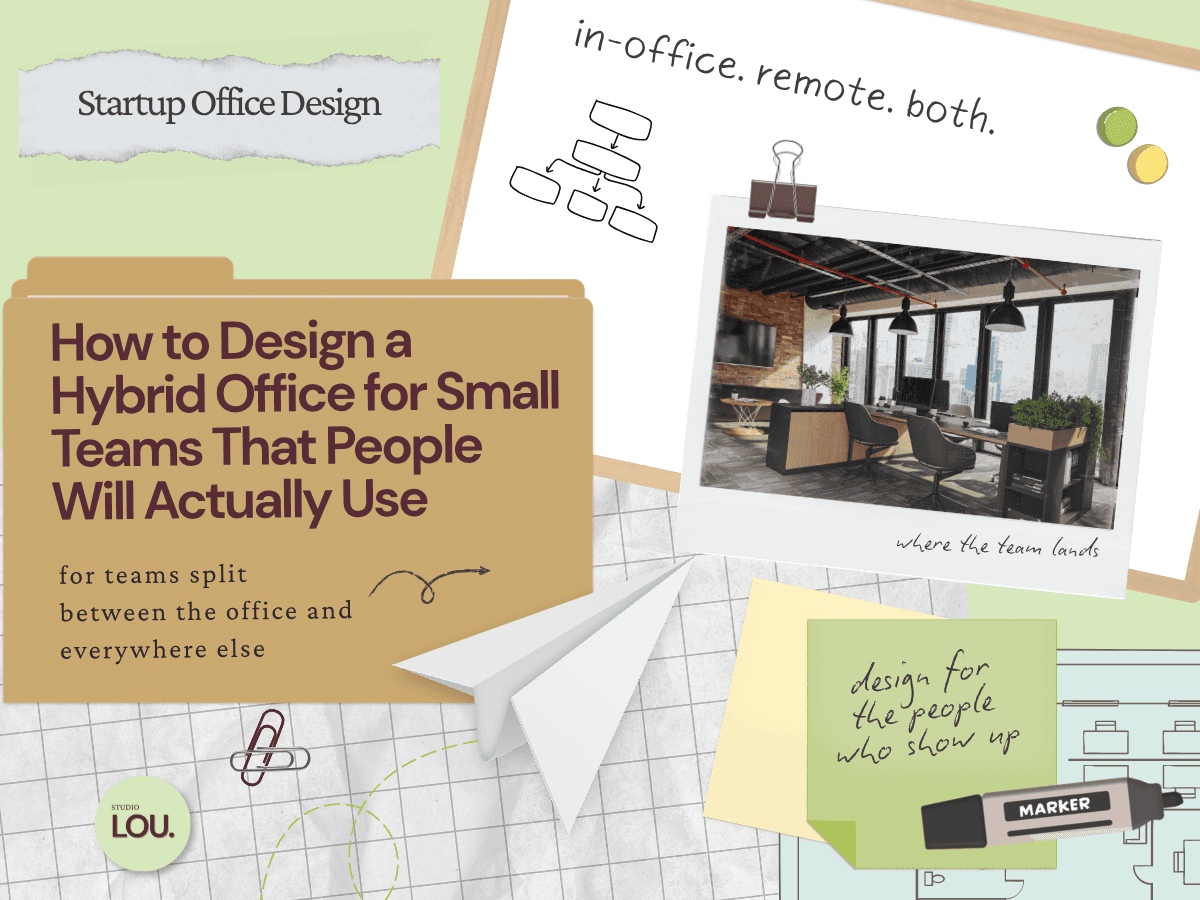
Why Hybrid Offices Still Matter for Small Teams | What Small Teams Actually Need from a Hybrid Office |
Making the Office Worth the Commute | Designing for Quick Shifts Between Work Modes |
Simple Hybrid-Friendly Tech Choices | Lessons From Past Projects + A Few Small Next Steps |
Why Hybrid Offices Still Matter for Small Teams
Hybrid work makes sense for small teams. It saves money, supports balance, and opens the door to hiring great people who may not live nearby. But as the MIT Sloan Review explains in its research on hybrid productivity, people only benefit from hybrid work when the in-person days feel purposeful and structured.
And that is the real challenge. Getting people to actually come in can be difficult in this post-COVID world. Home is comfortable and coworking is flexible, so when employees have options, your office has to feel like the place that makes their day easier and more enjoyable.
It also helps to remember that certain types of work still happen best face-to-face. Quick problem-solving, creative collaboration, strategy conversations, and the spontaneous questions that never quite justify a scheduled call. The Guardian reported in 2024 that hybrid employees tend to feel happier, healthier, and more productive when their in-office days support meaningful interaction.
Walking through San Francisco recently, especially around SoMa and Mission Bay, I saw how startups were embracing this. Their hybrid offices felt active but calm, flexible but intentional. People were using the space because it worked for them.
That is the goal here. A hybrid office that feels worth the commute and supports the work that matters most. If you're working with a smaller footprint, my post on maximizing small office spaces goes deeper into layout, zoning, and making every square foot work harder.
What Small Teams Actually Need from a Hybrid Office
A hybrid office is not just a downsized office. Small teams move differently. Work rhythms change throughout the week. On busy days, collaboration spikes. On quieter days, people want privacy, clarity, and comfort.
Here are the basics most small teams need:
A welcoming central area
A dependable place for people to gather, meet, and reconnect. When employees walk in, this should feel inviting and easy to settle into.
A few quiet spots
Phone booths, semi-enclosed desks, or tucked-away seating. Cisco’s overview of smart office layouts explains how simple spatial cues can support concentration.
A plan for the midweek rush
Hybrid offices peak Tuesday through Thursday, which means the space has to work for a full house three days a week and not feel abandoned the other two. You want busy, not chaotic, and not a ghost town on Friday either.
Clear purpose for each zone
When people know where to go for different types of work, the entire office feels more intuitive.
If you want help figuring out adaptable layouts or modular choices, Designing Modular Offices walks through how small teams stay flexible without spending a fortune.
Making the Office Worth the Commute
This is the heart of hybrid success. People need a real reason to come in. When the office feels dull, confusing or uncomfortable, hybrid falls apart. Harvard Business Review recently highlighted that companies with poorly designed hybrid setups see lower engagement and more inconsistency.
But good design solves a lot of that.
During my recent trip to San Francisco, I walked through several startup offices that were doing this well. Meeting rooms converted into brainstorming areas, lounge zones doubled as impromptu meeting spots, and desks shifted between solo and group work. Best of all, the spaces felt warm rather than institutional.
Here are a few things I noticed that made these offices worth the trip:
Comfortable seating
Nothing overly corporate. Soft lounge pieces, ergonomic chairs, and a few cozy corners.
An intuitive layout
People could move naturally through the space without guesswork.
Small signs of care
Calm lighting, plants, thoughtful finishes, and organized storage areas. These little details create a sense of pride.
A well-designed hybrid space makes in-person days feel smoother, lighter, and more enjoyable. That alone is worth a commute for many teams.
Designing for Quick Shifts Between Different Work Modes
Hybrid schedules move quickly. People jump between calls, meetings, solo work, and group discussions in the same hour. Your office should support these shifts without friction.
I like to think in terms of three simple modes: focus, connect, and reset.
Focus
This includes pods, quiet rooms, and partially enclosed seating. Many small San Francisco offices use phone booth-style pods because they fit tight footprints easily. Built In has great examples of tech offices using these layouts.
Connect
Shared tables, flexible meeting areas, and collaboration zones. K2 Space explains how simple workplace tech can support these spontaneous moments.
Reset
Breakout areas matter more in hybrid settings than most people expect. When employees shift between remote calls and in-person work, they need small mental pauses.
IE UK also has a helpful framework called the “five pillars of hybrid office design,” that covers how fluid movement improves hybrid performance.
Tech-forward furniture can make these transitions feel even smoother. Adjustable-height desks, mobile tables, modular soft seating, and furniture with built-in power are not trendy extras. They support the natural flow of hybrid work.
Simple Hybrid-Friendly Tech Choices
Hybrid teams need tech that reduces friction, not adds to it. Luckily, most of the useful upgrades are small and affordable.
Reliable hybrid meeting setups
A clear camera, good sound, and easy screen sharing make meetings feel natural. Deskbird has a great overview of workplace tech essentials.
Effortless room booking
Even a basic online scheduler prevents double booking and frustration.
Smart or timed lighting
This reduces eye strain and keeps the space feeling consistent throughout the day.
AI-assisted workflows
AI transcription, automated notes and simple summarizers help hybrid employees stay aligned when some people are in the room and others are remote. McKinsey explores how these tools are becoming part of everyday work.
Furniture with built-in power
People move more in hybrid offices. Power should move with them.
These little upgrades remove daily friction and help hybrid feel smooth instead of burdensome.
Lessons I've Learned From Past Projects
Across the commercial work I've done, the same pattern shows up. Hybrid success comes from clarity. When people walk in and understand how to use the space, productivity and collaboration rise naturally.
In leasing offices I have designed, I used color palettes, lighting choices, and furniture style to create an easy flow for visitors and staff. That same logic helps hybrid teams move through their day, while also giving the space an opportunity to tell the company's story through design.
At a luxury real estate office I worked on, I leaned into biophilia, natural finishes, and local artwork. It created a space employees felt proud to share with clients. Pride plays a huge role in hybrid engagement.
And in a community college library I worked on, modular seating and midcentury shapes helped students shift between quiet work and group collaboration. That adaptability is exactly what small hybrid teams need.
Good design does not have to be extravagant. It just has to be intentional. People feel that the moment they walk in.
A Few Small Next Steps
If you want a simple place to begin, start with these questions:
What do people actually come into the office to do?
What type of work do you want them to be in the office for?
What slows them down the most right now?
What would make the space feel worth the commute?
Hybrid offices only work when they support the work that happens best in person and feel comfortable enough that people want to show up. When you can answer these, the design path becomes clear.
You can start small with layout updates, or take a bigger step using ideas from Modern Office Design.
Little improvements create big shifts for hybrid teams, and if you want a second read on your space before you commit to anything, get in touch here.
Be the first to know about every new letter.
No spam, unsubscribe anytime.